
Print a Sign-In Sheet | Spanish Version Coming Soon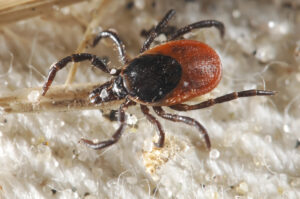
Kentucky is home to many species of ticks that can transmit diseases to humans. On average, more than 50,000 cases of tick-borne diseases in humans are reported to the Centers for Disease Control and Prevention (CDC) each year.
Outdoor occupations, such as construction, utilities, parks and recreation, surveying, and landscaping, are at increased risk of exposure to infected ticks. Properly identifying ticks, preventing tick bites, and recognizing signs and symptoms of common tick-borne diseases can reduce the risk of acquiring a tick-borne disease.
Tick-borne Diseases
- Common diseases include Lyme disease, anaplasmosis, babesiosis, ehrlichiosis, Rocky Mountain spotted fever, and others.
- Some ticks can transmit diseases to humans within minutes of beginning to feed, while others start transmitting diseases only after several hours of continuous feeding.
- Ticks that carry Lyme disease (blacklegged ticks, also known as deer ticks) require more than 24 hours of continuous feeding to transmit Lyme disease to a human host.
- Many other tick-borne diseases can be transmitted in minutes.
Where do Ticks Live?
- Tick habitats include:
- Wooded areas and areas with brush and overgrown grass.
- Leaves and tall grass near outdoor worksites or in residential areas.
- Areas where deer, rodents, and other tick-carrying animals may inhabit.
- Ticks are most active during warmer weather in the spring and summer, but can emerge anytime during the year, including warm days in the fall and winter.
Prevention
- Understand where ticks live and take precautions.
- Wear long sleeves and pants tucked into socks or boots; wearing light-colored clothing may allow you to see ticks more easily.
- Apply tick repellent with DEET to skin that is not under clothing.
- Treat clothing and gear with products containing 0.5% permethrin.
- Check yourself, clothing, and gear/equipment for ticks when you have been in a tick habitat.
- Shower after exposure to tick habitats and wash and/or dry your clothing at high temperatures immediately after returning home.
- Do a thorough body check for ticks, concentrating on the feet, armpits, backs of knees, elbows, hair, waist and groin areas, and behind ears.
- Promptly remove and dispose of any ticks you find.
Tick Removal
- Do not attempt to crush, burn, or smother a tick or paint it with nail polish.
- Clean the area around the tick with rubbing alcohol.
- To remove the tick, put tweezers on the skin and grasp the tick’s head as close to the skin’s surface as possible.
- Pull upward slowly and firmly with even pressure.
- Once the tick is removed, clean the area again with rubbing alcohol.
- Never twist or jerk the tick as this can cause the mouthparts to break off and remain in the skin. If this happens, remove the mouthparts with tweezers. If you cannot remove the mouth easily with tweezers, leave it alone and let the skin heal.
- Dispose of live ticks by drowning in rubbing alcohol, placing in a sealed bag, wrapping in tape, or flushing down the toilet.
Sighs and Symptoms of Tick-Borne Diseases
Many tick-borne diseases have nonspecific symptoms at the onset of the illness. Common symptoms include:
- Fever and/or Chills.
- Aches and Pains.
- Headache.
- Fatigue.
- Joint Pain.
- Rash.
Contact your healthcare provider if you develop these symptoms within a few weeks of getting a tick bite.
KEMI does not assume liability for the content of information contained herein. Safety and health remain your responsibility. This information is to be used for informational purposes only and not intended to be exhaustive or a substitute for proper training, supervision, or manufacturers’ instructions/recommendations. KEMI, by publication of this information, does not assume liability for damage or injury arising from reliance upon it. Compliance with this information is not a guarantee or warranty that you will be in conformity with any laws or regulations nor does it ensure the absolute safety of any person, place, or object, including, but not limited to, you, your occupation, employees, customers, or place of business.
